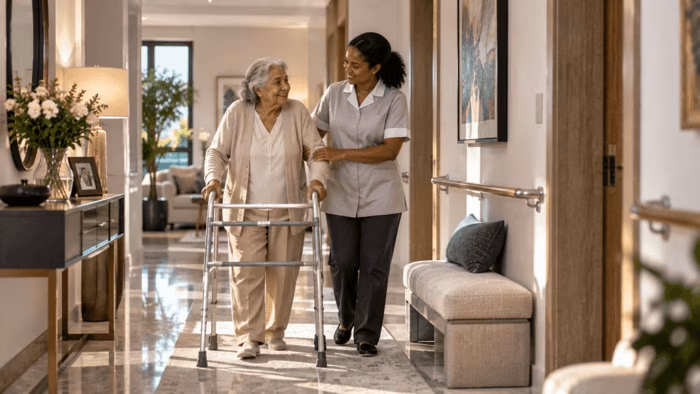
A useful elderly-care request should define the senior’s mobility, daily support needs, household routine, and the limits of the caregiver’s responsibilities.
ALKABA Agency works with overseas recruitment partners looking for elderly caregiver suppliers in Ethiopia through a structured office-to-office process. Rather than sourcing against the broad title “caregiver,” we turn each care requirement into practical criteria for screening, interviews, readiness, and final handoff.
This category requires careful selection. Patience, communication, temperament, physical capability, respect for personal dignity, and relevant experience can all influence whether a candidate is suitable.
💡 Key Point: Caregiver sourcing becomes more accurate when the partner defines what daily support is required and what responsibilities fall outside the role.
📝 Start with a Clear Care Requirement
“Elderly caregiver” can describe very different daily responsibilities.
One senior may remain mostly independent and need companionship and light routine assistance. Another may require regular help with movement, personal hygiene, meals, and daily activities.
Before sourcing begins, the partner should define:
-
Mobility level
-
Level of independence
-
Daily-living assistance required
-
Personal-hygiene support
-
Companionship expectations
-
Meal-related assistance
-
Household routine
-
Communication expectations
-
Previous care experience required
-
Working schedule
-
Any relevant non-clinical special needs
A clear brief gives ALKABA a practical basis for candidate selection.
🧩 Care Requirement Board
| Requirement | What the Partner Should Define |
|---|---|
| Mobility | Independent, limited mobility, or regular assistance |
| Daily support | Dressing, hygiene, meals, movement, routine support |
| Companionship | Level of interaction and supervision |
| Experience | Previous elderly-care experience required or preferred |
| Schedule | Daily hours and care routine |
| Boundaries | Tasks specifically outside the caregiver’s role |
The care brief becomes the reference point for the rest of the recruitment process.
🚫 Define the Care Boundary Before Candidate Selection
Elderly caregivers provide non-clinical daily support. They do not replace nurses or licensed healthcare professionals.
Depending on the household, a caregiver may assist with:
-
Companionship
-
Routine movement
-
Dressing
-
Basic personal hygiene
-
Meal-related routines
-
Daily organization
-
Following an established household schedule
-
Reporting concerns to family members
The role should not be presented as including:
-
Medical diagnosis
-
Clinical treatment
-
Injections
-
Independent medication decisions
-
Skilled nursing procedures
-
Medical decision-making
This boundary should be clear before profiles are shortlisted.
⚠️ Important: Any health-related responsibility must remain within the caregiver’s permitted role and the rules that apply in the destination country.
🔎 Turn the Care Brief into Suitability Criteria
Once the care requirement is defined, ALKABA separates essential requirements from preferences.
This helps caregiver suppliers in Ethiopia avoid producing a generic pool of candidates for roles that may require very different levels of support.
Must-Have Criteria
Depending on the requirement, these may include:
-
Patience
-
Calm communication
-
Comfort with elderly routines
-
Ability to follow instructions
-
Respect for privacy
-
Understanding of role boundaries
-
Physical ability appropriate to the expected duties
-
Availability for the required schedule
Preferred Criteria
These may include:
-
Previous elderly-care experience
-
Experience supporting limited mobility
-
Previous overseas employment
-
Gulf experience
-
A specific language
-
Previous live-in household experience
Not every preference has to become a mandatory condition.
Keeping that distinction clear helps preserve a practical candidate pool while maintaining the standards that matter most.
🇦🇪 Match the Requirement to the Receiving Household
The destination country does not define the entire caregiver role.
For recruitment partners sourcing candidates for the United Arab Emirates and other Gulf markets, household circumstances can change the candidate profile significantly.
Relevant factors may include:
-
The senior’s mobility
-
Availability of family support
-
Household size
-
Accommodation arrangements
-
Working hours
-
Personal-care expectations
-
Communication requirements
-
Daily routine
For example, a household where the senior is largely independent may prioritize companionship, patience, and routine assistance.
Another household may require greater experience with limited mobility and personal-care routines.
The job title may be identical, but the candidate criteria should not be.
👥 Previous Experience Is Only One Part of Suitability
Previous caregiving experience is valuable, but it does not automatically prove suitability for every elderly-care role.
ALKABA also considers:
-
Temperament
-
Patience
-
Communication
-
Ability to follow routines
-
Respect for dignity
-
Comfort with personal-care tasks
-
Response to stressful situations
-
Understanding of when to ask for help
A candidate may have worked previously as a caregiver but still be unsuitable for a particular household.
Likewise, a candidate with a strong aptitude for care may need further preparation before being matched to more demanding responsibilities.
For agencies comparing elderly caregiver suppliers in Ethiopia, this broader assessment provides more useful information than a previous job title alone.
🚶 Mobility Assistance and Safe Daily Support
Mobility requirements should be described before the shortlist is prepared.
Depending on the role, a caregiver may need to support:
-
Routine standing and sitting
-
Movement between areas of the home
-
Positioning awareness
-
Basic transfer assistance where appropriate
-
Fall-risk awareness
-
Access to bathrooms or common spaces
-
Personal-care routines
-
Daily movement according to family instructions
The objective is safe daily assistance within the caregiver’s role.
It is not skilled medical handling.
📌 Note: A requirement involving significant mobility assistance should be identified at the beginning, not discovered during the final interview.
This allows ALKABA to prioritize candidates whose previous experience or preparation is closer to the expected responsibilities.
📊 Move from the Care Brief to Readiness Milestones
ALKABA treats caregiver sourcing as a sequence of readiness milestones.
🔄 Care Brief → Readiness Milestones Board
| Milestone | What ALKABA Reviews | Output |
|---|---|---|
| 1. Care Brief | Mobility, routine, duties | Defined care requirement |
| 2. Suitability | Experience, temperament, communication | Relevant candidate group |
| 3. Health Readiness | Medical-screening status | Candidate fitness reviewed |
| 4. Interview | Partner questions and feedback | Preferred candidates |
| 5. Preparation | Role boundaries and daily support | Better role readiness |
| 6. Handoff | Selection and file status | Candidate moves to next stage |
This process keeps the original care requirement connected to every later decision.
It also makes it easier to identify where a candidate is ready and where additional clarification or preparation is still needed.
🩺 Check the Candidate’s Own Health Readiness
Medical screening evaluates the candidate’s readiness for employment. It does not qualify her to provide medical treatment.
Through ALKABA’s medical check-up services, relevant health-screening steps can form part of candidate readiness before the employment process moves forward.
The review may consider:
-
Medical-screening status
-
Fitness for the expected work
-
Required health documentation
-
Destination-related medical steps
-
File completeness
This distinction matters.
A caregiver may support an elderly person in everyday routines, but her own medical clearance and the senior’s healthcare needs are two separate issues.
💡 Direct Answer: Medical screening confirms employment readiness; it does not turn a caregiver into a healthcare professional.
🧭 Keep Caregiving Separate from Other Household Roles
A caregiver is selected around the senior’s daily support needs, not around general housekeeping duties.
Partners reviewing ALKABA’s domestic workforce from Ethiopia may also require housekeepers, nannies, cooks, drivers, or other roles.
The selection criteria should remain separate.
A housekeeper is primarily selected for household routines.
A nanny is selected for childcare suitability.
A caregiver is selected around companionship, daily-living assistance, mobility needs, temperament, and care boundaries.
Mixing these roles too loosely can create problems after employment begins.
🎥 What Should Agencies Ask During a Caregiver Interview?
A caregiver interview should test patience, judgment, communication, and understanding of daily support boundaries.
Useful questions may include:
-
What elderly-care responsibilities have you handled before?
-
Have you supported someone with limited mobility?
-
How would you help a senior who is reluctant to accept assistance?
-
What would you do if the senior suddenly felt unwell?
-
How would you protect privacy during personal-care routines?
-
How would you report an unusual change to the family?
-
What would you do if a task was outside your experience?
-
How do you remain patient during repetitive daily routines?
The purpose is not to find perfect rehearsed answers.
The interview should help the agency understand how the candidate thinks about responsibility, boundaries, and communication.
🔄 Use Interview Feedback to Improve the Candidate Group
The first interview round may reveal information that was not obvious from the original brief.
For example, the partner may discover that it needs:
-
More experience with limited mobility
-
Stronger communication
-
Previous elderly-care employment
-
Greater comfort with personal-care routines
-
Another language preference
-
More confidence following structured routines
ALKABA can use this feedback to refine the next candidate group.
💡 Direct Answer: A rejected candidate is useful when the reason for rejection becomes a clearer selection criterion for the next shortlist.
This keeps the sourcing process moving forward instead of repeatedly presenting candidates with the same mismatch.
🎓 Prepare the Selected Candidate for the Defined Role
Training strengthens a suitable caregiver; it does not replace the temperament or aptitude required for the role.
Through ALKABA’s training services, selected candidates can receive preparation related to:
-
Understanding role boundaries
-
Safer mobility awareness
-
Daily-living routines
-
Personal-care support
-
Maintaining dignity and privacy
-
Companionship
-
Communication
-
Fall-risk awareness
-
Reporting concerns
-
Following household instructions
Preparation should reflect the role described by the partner.
A caregiver selected mainly for companionship does not need exactly the same preparation emphasis as one supporting a senior with more limited mobility.
🤝 From Final Selection to Mobilization Handoff
Once the preferred candidate is selected, several readiness points still need to align.
These may include:
-
Candidate confirmation
-
Medical-screening status
-
Training status
-
Documentation status
-
Destination requirements
-
Availability
-
Final understanding of the role
The candidate can then progress toward travel and the start of employment according to the partner’s process and destination requirements.
This stage is important because a successful interview alone does not mean every employment step is complete.
🌍 Ethiopia-Side Coordination for Caregiver Recruitment
As one of the manpower recruitment agencies in Ethiopia serving overseas partners, ALKABA manages the Ethiopia-side candidate workflow around the requirements supplied by the receiving agency.
The partner defines:
-
Care needs
-
Experience requirements
-
Destination
-
Interview preferences
-
Employment conditions
ALKABA then uses those inputs to structure:
-
Candidate sourcing
-
Suitability review
-
Interview preparation
-
Readiness checks
-
Training
-
Final handoff
The receiving agency remains responsible for the destination-side requirements that apply within its market.
This separation helps keep responsibilities clear between both sides.
❓ Frequently Asked Questions
-
How do elderly caregiver suppliers in Ethiopia match candidates to care requirements?
They begin with mobility, daily support, experience, household routine, and role boundaries. ALKABA uses these details to define the candidate criteria before preparing profiles for interview.
-
What support can an elderly caregiver provide?
She can provide non-clinical daily assistance, companionship, mobility support, and routine personal care. The exact responsibilities should be defined before candidate selection.
-
Can agencies request caregivers with previous elderly-care experience?
Yes. Previous experience can be made a mandatory requirement or a preferred criterion depending on the complexity of the care role.
-
Are caregiver candidates medically screened?
Relevant medical screening can form part of candidate readiness. The purpose is to review the candidate’s own fitness for employment, not to qualify her to perform medical procedures.
-
Can an elderly caregiver provide medical treatment?
No. A caregiver should not diagnose conditions, provide skilled nursing treatment, administer injections, or independently make medical decisions.
-
How should a requirement describe limited mobility?
It should explain what the senior can do independently and where assistance is needed. For example, the partner should clarify whether support is required for standing, walking, positioning, or routine movement inside the home.
-
Why should personal-care duties be stated before the interview?
Because comfort with personal-care assistance varies between candidates. Stating these duties early allows ALKABA to avoid presenting candidates who are not suited to that level of support.
-
What happens if the interview reveals that the care role is more demanding than originally described?
The selection criteria should be revised before more candidates are presented. ALKABA can then prioritize stronger experience, mobility-support familiarity, communication, or other newly identified requirements.
📩 Send Your Elderly Caregiver Requirement
If you are comparing caregiver suppliers in Ethiopia, send ALKABA Agency the number of candidates required, the senior’s mobility level, daily support needs, required experience, working schedule, language preference, destination, and interview method.
We will convert those details into clear suitability and readiness criteria before preparing the candidate group.
Contact ALKABA Agency to send your elderly-care requirement.